Animal agriculture needs to be exposed as climate change’s partner in crime.
There is no single cause of anthropogenic climate change, but many sources have suggested that animal agriculture is a major culprit. If you want to learn about how animal agriculture contributes to climate change, get informed on how animal agriculture destroys the environment, and find out how you can feel like you’re making a difference for the environment every day, you’ve come to the right place.
Animal agriculture is the practice of breeding animals for the production of animal products. Animal products include anything that is made from animals, such as meat, eggs, dairy and skins.
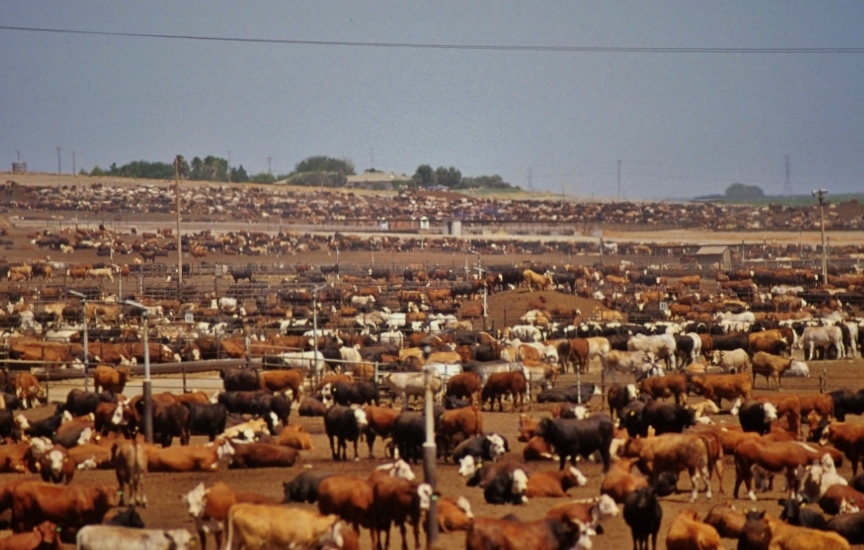
According to the Food and Agricultural Organization of the United Nations, Livestock contributes to 40 percent of agricultural output in developed nations and 20 percent in developing ones. Nearly half of the land in the United States alone is used for animal agriculture.
There is no doubt that the global human population relies heavily on animal products for our livelihoods every day. But at what cost?
The statistics used in this entry are inspired by the documentary Cowspiracy and are supported by organizations such as the Food and Agricultural Organization of the United Nations (FAO), the U.S. Environmental Protection Agency, the U.S. Department of Agriculture, and others. I have sorted through some of the questionably exaggerated claims from the environmental film, and have chosen to write about a few of the documentary’s well-supported highlights.
 |
| Image by: Wilder Utopia |
Animal Agriculture’s Role in Climate Change
Carbon dioxide has taken the bulk of the blame for climate change, but methane causes just as much harm to the climate, if not more.
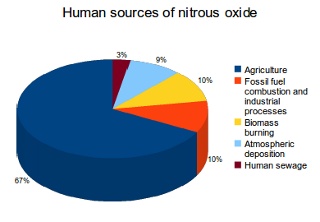
Livestock is responsible for 65 percent of all human-related emissions of nitrous oxide – a greenhouse gas with 296 times the global warming potential of carbon dioxide, and which stays in the atmosphere for 150 years. Supported by the FAO and the U.S. Energy Information Administration, this Cowspiracy statistic poses an alarming issue, considering the world’s projected population growth.
 |
| Image By: What's Your Impact |
Agriculture produces 4.5 million tonnes of nitrous oxide per year, much of which is due to animal manure. At this rate, 5.8 million tonnes of nitrous oxide will be produced every year by 2050, when the world is expected to reach 9 billion people.
These heightened emissions rates will amplify the effects of global warming and continue to impact the Earth well past the year 2200.
The effects of natural gas and carbon dioxide on climate degradation are heavily focused on by environmental groups such as the Environmental Protection Agency (EPA), Green Peace, and the Sierra Club, but U.S. methane emissions from livestock and natural gas are nearly equal.
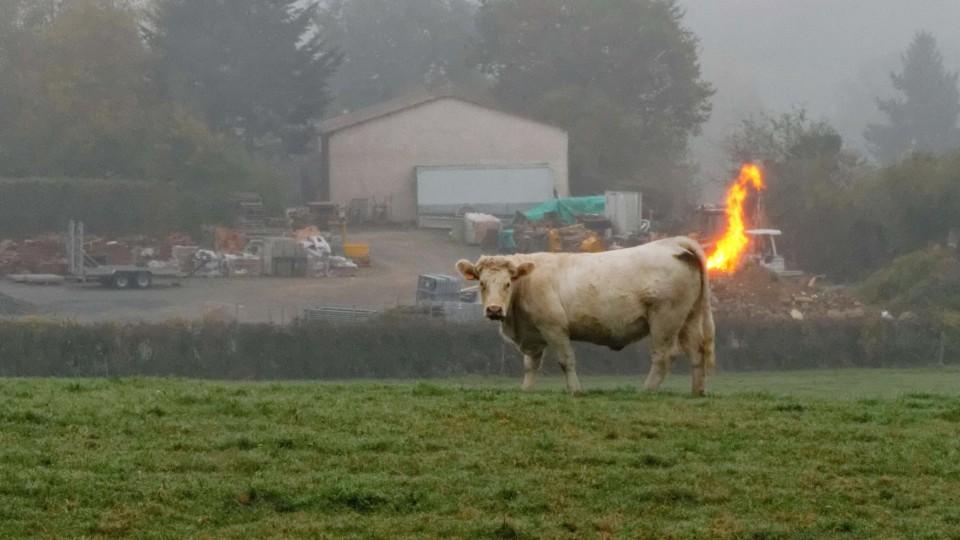
The best known cause for methane emissions is cow flatulence and burps. According to the FAO, there are 1.5 billion cattle being used for animal agriculture in the world today.
A single cow releases 120 kilograms of methane per year. Cows, only a fraction of animals used for animal agriculture, emit 180 billion kilograms of methane per year.
This number is only expected to increase.
 |
| Image by: TRT World |
How Animal Agriculture Harms the Environment
Animal agriculture is the leading cause of species extinction, ocean dead zones, water pollution, and habitat destruction.
About a third of the planet is desertified, with livestock as the leading driver, the leading causes of rainforest destruction are livestock and feedcrops, and we could see fishless oceans by 2048. This is a lot to unpack.
A desertified planet means that the entire global agricultural industry is going to suffer with their annual yields—an ironic impact of an agricultural practice.
Farming makes up 50 to 90 percent of jobs in developing countries. The impact of the animal agricultural industry on the economies of developing countries is catastrophic.
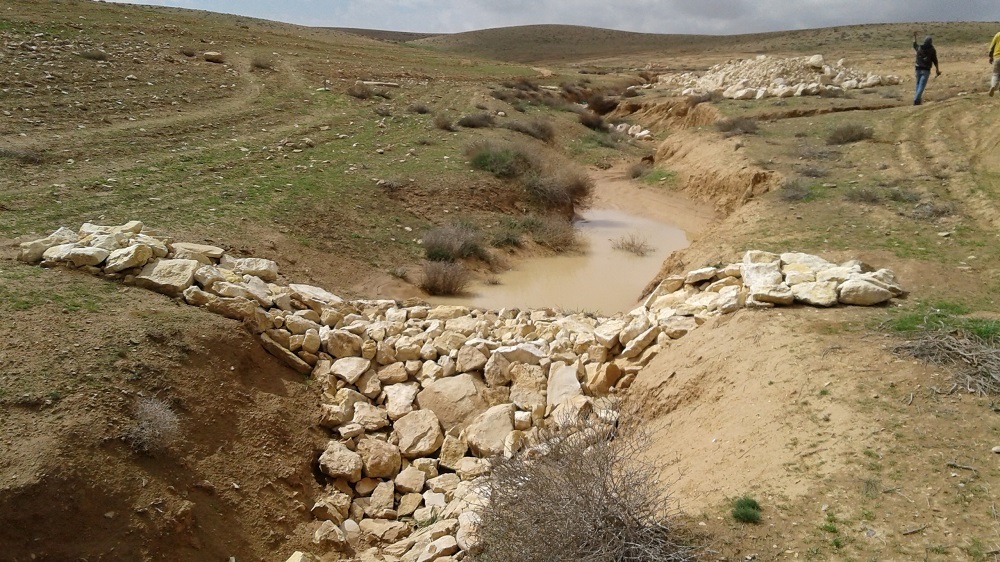
Image by: IPCC
Everyone was frenzied when the Amazon rainforest was burning, and for good reason. The world’s rainforests hold over half of all life on Earth.
We need to be worried about the mass destruction that is happening to our rainforests because of the animal products we are consuming. Thousands of species live within our rainforests, and acres of their homes are being destroyed every day because we need more grazing fields for cattle that we are just going to kill for production.
 |
| Image by: IUCN |
Perhaps the most alarming statistic is that we could see the end of our favorite fillets in 28 years. This fact, supported by National Geographic, brought the global fish crisis to my attention for the first time.
A single serving of salmon has 100 grams of omega-3—one of the only foods with such a high amount of this essential nutrient. Not to mention, a huge portion of coastal regions depend on their fish markets for income.
The impact of animal agriculture on the global fish market and population is unsettling.
| Image by: SeaChoice |
What You Can Do
The simplest answer to solving these issues is to cut your consumption of animal products. If you want to dissolve the industry, you need to cut off their profit.
Whether you choose to cut them from your life entirely is up to you, but the less animal products you consume, the better.
A person who follows a vegan diet produces the equivalent of 50 percent less carbon dioxide, uses 1/11th oil, 1/13th water, and 1/18th land compared to a meat-lover for their food. Each day, a person who eats a vegan diet saves 1,100 gallons of water, 45 pounds of grain, 30 square feet of forested land, 20 pounds of CO2 equivalent, and one animal’s life.
This isn’t to tell you to go completely vegan, but it does go to show that any cuts to animal products in your daily life would go a long way.
The biggest step would be to cut out beef and dairy. Only buying chicken and pork products is definitely a sizable decrease, but it allows you to maintain meat consumption with a lower footprint.
Another method would be vegetarianism. With this lifestyle, you would still be consuming dairy products, but all of your meat consumption, including beef and fish, would be completely cut.
Whether you decide to partake in meatless Mondays or just decide to go all in and try a whole foods, plant-based vegan lifestyle, your diet decisions matter.
If you’re interested in learning more, I recommend you watch Cowspiracy or What the Health on Netflix. Some great resources for plant-based diet planning can be found by looking at Dr. Michael Greger’s “Daily Dozen” and by visiting the "Forks Over Knives" website.


